
1. What does the crater hold?
At Kīlauea’s rim, the caldera isn’t only a vast opening made by volcanic forces. For many Native Hawaiians, Halemaʻumaʻu is Pele’s home, and the crater is her hale, or house.
That understanding comes with a different way of arriving: not as an owner of the view, but as a guest in a place with its own meaning. Chants, hula and family accounts have been brought here across generations, and people still come with those practices. Belief isn’t a requirement for visitors; courtesy is the useful starting point.
2. How does Pele’s story travel?
Pele is associated with fire, lava and volcanoes in Hawaiian tradition. Pele-honua-mea, “Pele of the sacred earth,” is one name for her, while Tūtū Pele gives her the familiar place of grandmother. Her relatives include many brothers and sisters, among them Hiʻiaka, the youngest sister, whose journey between islands is told in a major Hawaiian epic.
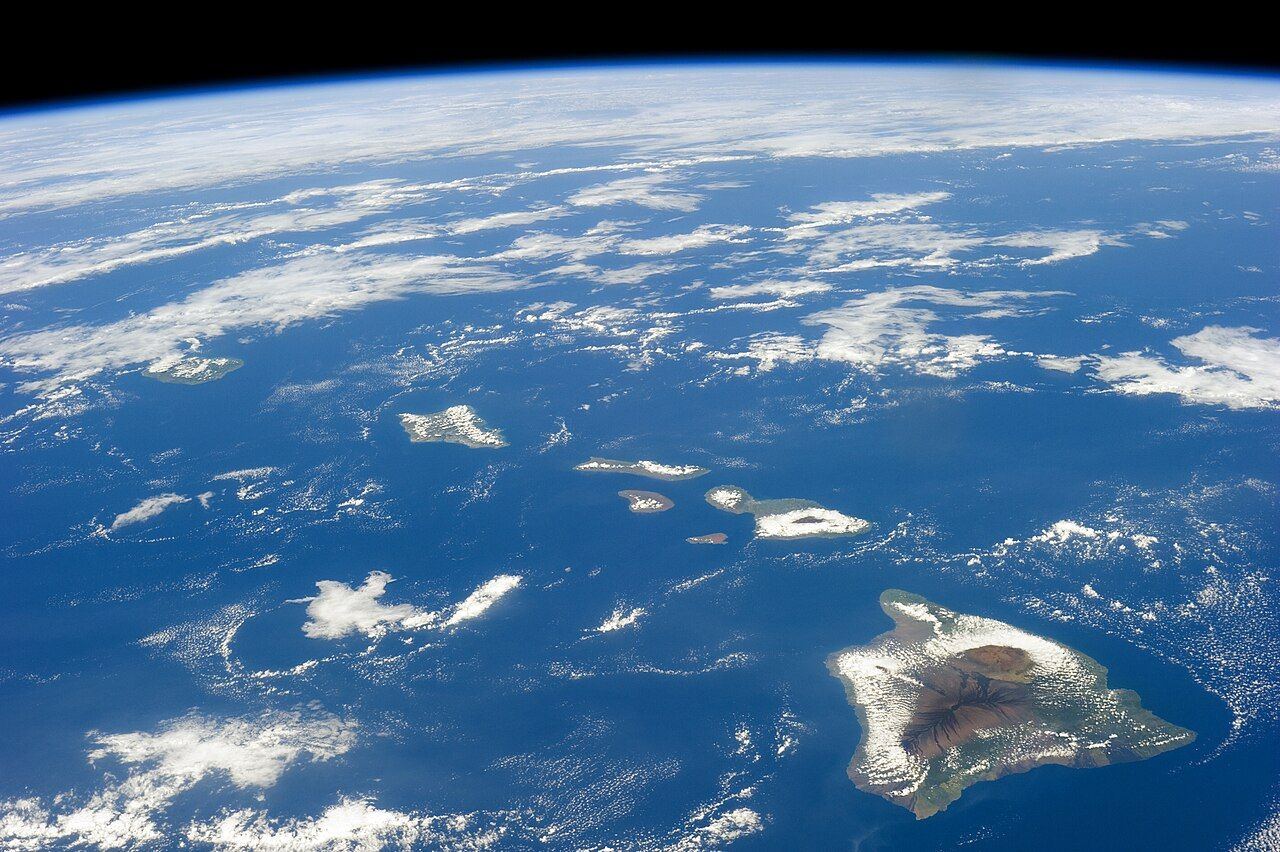
In the stories, Pele comes from Kahiki and searches along the island chain for a place deep enough to contain her fire. Her route reaches Kauaʻi, Oʻahu, Molokaʻi and Maui before Kīlauea becomes home. There’s an interesting alignment here, without making story and science interchangeable: the islands grow younger toward the southeast, and Hawaiʻi Island, still erupting, is the youngest.

These accounts also hold a view of change that’s harder to flatten into a simple picture of destruction. Lava can consume forests and homes, while later forming new land at the coast; for many families, an eruption belongs to an ongoing relationship with the land.
3. Where do fire and geology meet?
The summit’s scientific story and its cultural stories can sit beside each other. Reading the long history of Kīlauea's eruptions offers another way to understand what has happened here, without asking the visitor to choose one account over another.
That balance matters beyond the summit, too. In Puna, the land shaped by lava is also part of people’s lives. The 2018 eruption brought loss of homes and hardship to communities; a view of new ground can’t tell the whole story of a place. A visit to the Puna coast and its new land asks for attention to both the landscape and the people connected to it.
4. Why leave the stones in place?
Within the national park, taking lava, sand or rocks is against park rules and widely regarded as disrespectful. Each piece belongs to Pele’s land in the way many people understand it. There’s also a familiar story about rocks taken home bringing bad luck, followed by boxes mailed back to the park with apologies.
Whether or not that story persuades, leaving the ground as it is makes sense here. Photograph a stone rather than carrying it away; leave volcanic glass, plants and strands of Pele’s hair where they lie. Don’t build rock piles, toss objects into the crater, or take material from the coast. Ōhiʻa blossoms stay on the trees.
Read next: Kīlauea’s summit, from the rim inward

5. What belongs to the people gathered here?
Small bundles of flowers or other gifts wrapped in ti leaves may appear near the crater rim. These hoʻokupu are offerings made with prayer, often by local families, and they’re meant for Pele. The right response is simple: leave them alone. They aren’t props for a visitor’s own gesture, and there’s no need to handle them or move in close for a photograph.
A hālau, or hula school, may also be present, with chanting or dancing. Give the group room and keep cameras down; don’t cross through it. If asked to move away, move. Across the island, heiau, petroglyph fields, burial places and other temple sites are protected. At Puʻu Loa, remain on the boardwalks and marked paths, and leave stone walls and platforms unclimbed.
6. What can a few words change?
Hawaiian is an official language of the state, and its sounds and words are part of everyday place names, signs and greetings. Aloha reaches beyond hello or goodbye, carrying love, compassion and respect; mahalo is thank you. Kapu marks something forbidden or sacred, so a kapu sign is a clear boundary.
ʻĀina means land, the land that feeds, while mālama ʻāina is care for that land. Keiki means child, and kūpuna means elders. Even the marks in written Hawaiian matter: the ʻokina marks a brief break in the voice, and the kahakō lengthens a vowel. In words such as nēnē, that line changes how the word sounds and what it means.
7. What does respect look like on the ground?
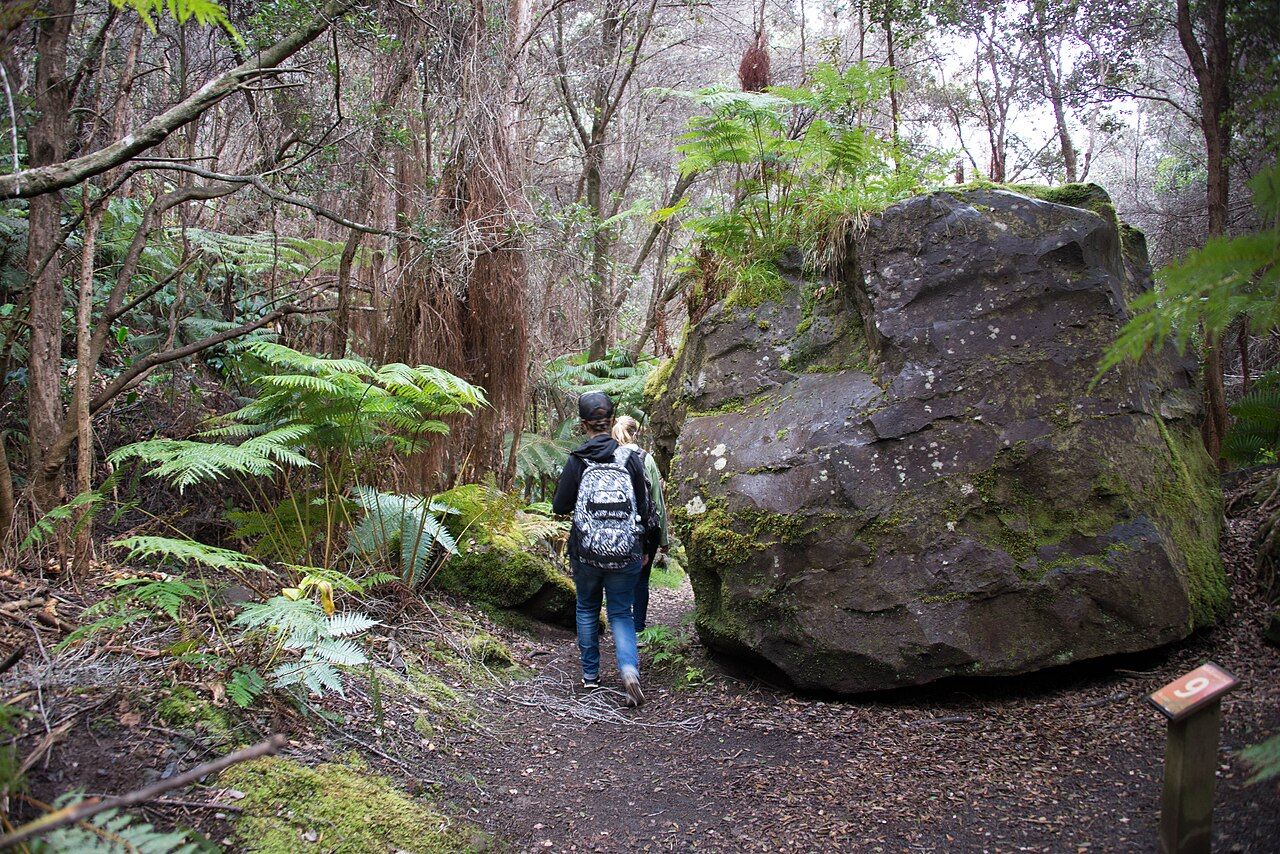
It often comes down to ordinary choices: stay on trails, follow closures and give wildlife room. Thin soils and young plants growing on lava can take years to recover, so wandering off a path leaves a mark beyond the moment. Drive slowly on park roads, too.
There’s a human side to those choices that deserves equal attention. People living near Kīlauea have faced eruptions, earthquakes and lost homes. Keeping that in mind makes a stop at an overlook feel less like looking at scenery and more like being present in a place where change reaches homes and families.
8. What should the walk leave with you?
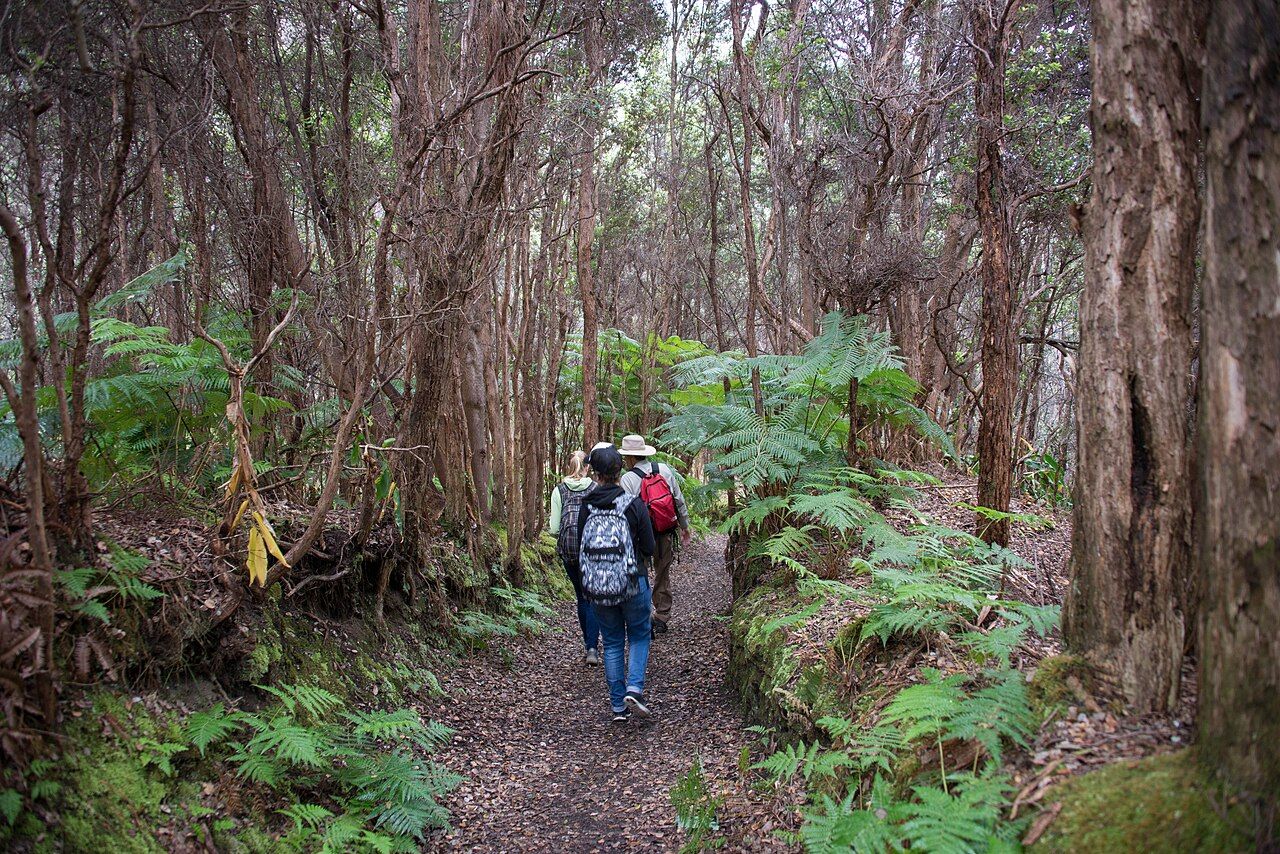
A trail through ʻōhiʻa forest on the caldera rim brings the trees and birds into the same frame as the crater. An open overlook gives room to look into Halemaʻumaʻu and stay awhile. Mist can hang among the trees on a morning walk; the view needn’t be hurried into a single explanation.
For the practical version of these notes, the essentials are modest:
- Leave rocks, sand, lava, plants and ʻōhiʻa blossoms where they are.
- Keep clear of offerings, hula groups and protected cultural places.
- Stay on trails and marked paths, observe closures, and give wildlife space.
- For another look at the active landscape, read vog, fumes and staying safe.