
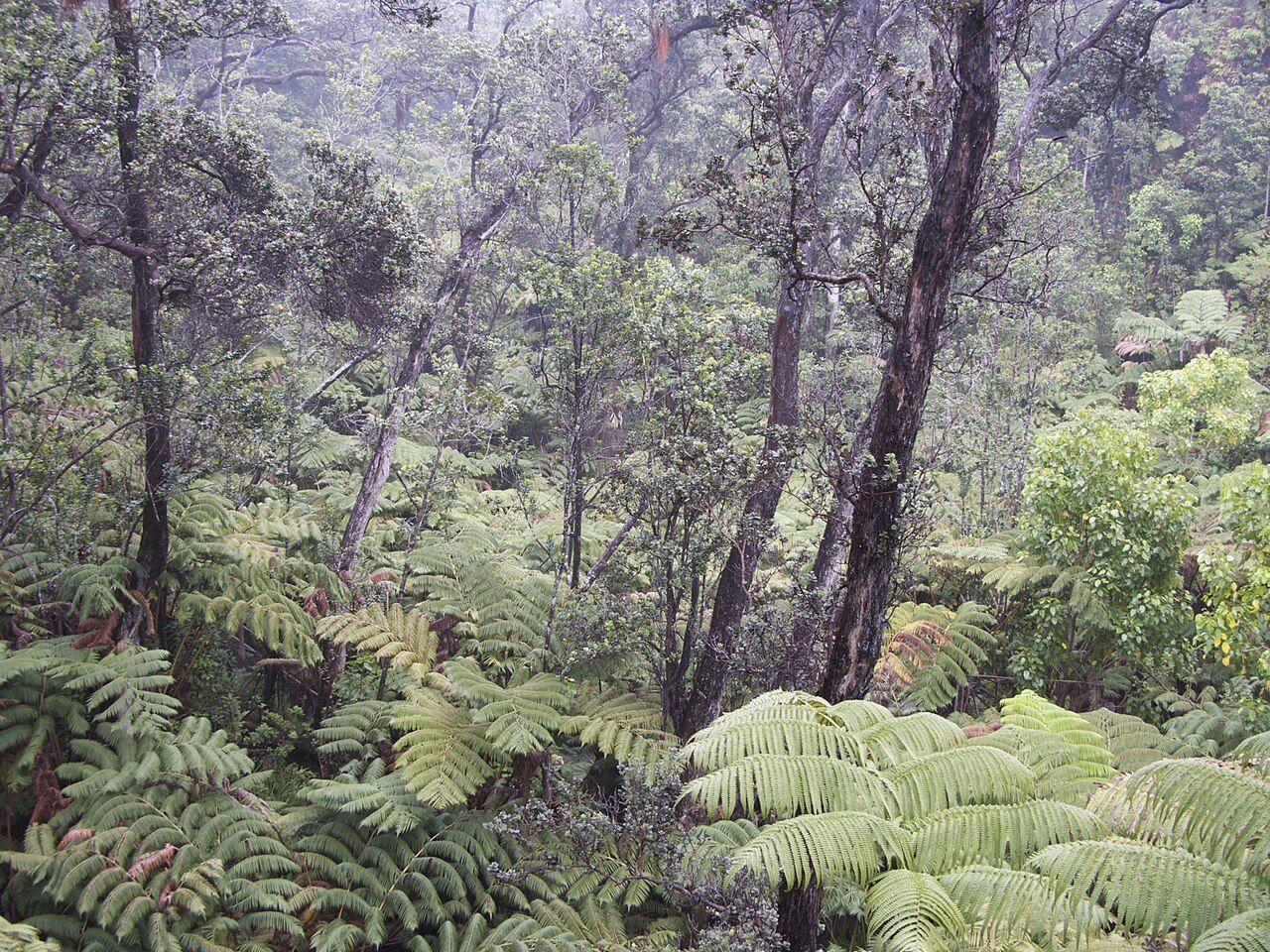
1. What does morning feel like up here?
A day in Volcano often begins with cool air, damp leaves and mist among the ʻōhiʻa trees and tree ferns. The village and Kīlauea’s summit sit roughly 1,100 to 1,200 metres up, on the windward slope, and the climate feels more mountain than beach.
Moist trade winds rise against the slopes, cool, and release rain; the forest depends on that steady supply. Locals call rain a blessing, and Hawaiian has many names for its different moods. A light drift through the trees is part of the place, not a surprise visit from bad weather.
2. Why might the clouds keep changing?
The trade winds travel across thousands of kilometres of open ocean before meeting Mauna Loa and Kīlauea. There, the air is pushed upward and cools, bringing rain to the windward side, including Hilo and Volcano, among the wettest inhabited places in the United States.
Most days, rain means drizzle, a passing shower, or low cloud threading through the trees, with bright spells mixed in. A grey morning can clear by noon; a sunny afternoon can close in within minutes. The wetter months tend to fall roughly between November and March, but rain can arrive in any month.
3. What’s worth noticing on a wet morning?
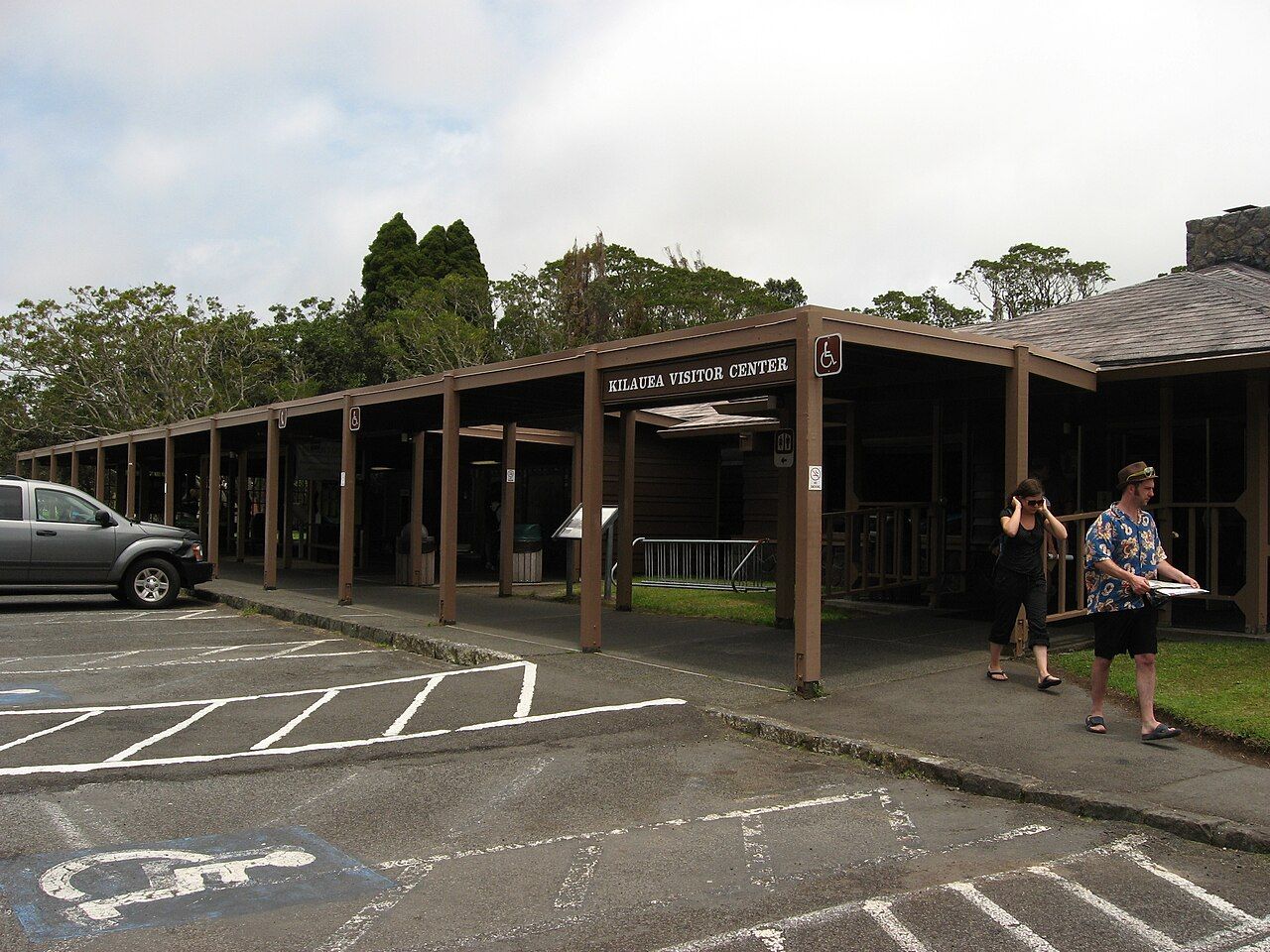
At the Kīlauea Visitor Center, near the park entrance, the rain forest starts right around the building. On a wet day, rangers can describe how conditions differ across the summit, the coast, and Mauna Loa’s slopes, and which trails and overlooks are open.
I like the way mist makes the forest feel close and quiet: wet earth and ferns in the air, birds calling through the canopy. Steam vents stand out more clearly in cool weather, and cloud moving along the caldera rim gives the morning its own kind of view.

4. What might the middle of the day bring?
Keep a longer walk for a clearer stretch, if one opens up; the the Kīlauea Iki crater floor is the sort of outing that benefits from a sunny window. If the summit stays wrapped in cloud, Hilo is usually warmer, even when rain is still around.
There’s no need to make the whole day depend on one kind of weather. Shorter visits and drives can fit into wetter hours, while the forest itself looks especially at home under its mist. The light can change quickly, so the layers that felt right at breakfast may need rearranging by lunch.
5. How does the coast change the picture?
Down the Chain of Craters Road, the forest gives way to open lava within a few kilometres. By the coast, the descent has dropped more than 1,000 metres; the air feels warmer and drier, the sun bounces off black rock, and shade is scarce.
A fleece that made sense in the village can feel like too much on the lava plains. This is where a sun hat and sunscreen earn their place, even if the morning began in drizzle. A coastal walk also calls for water, since the open rock offers so little cover.
Heading south to Punaluʻu black sand beach brings another version of the same contrast. The coast can feel like a different island from the cool, wet high country, and I’d rather carry a layer than spend the day wishing I had one.
6. What changes as afternoon turns toward evening?
Back near the summit, mild daytime air gives way to a sharper chill after dark. In winter, temperatures can fall to single figures Celsius, the forties Fahrenheit, and damp air makes that cold feel more insistent than the numbers suggest.
Many people visit the caldera after dark to see any glow from an active eruption. Standing at an overlook in wind and drizzle for half an hour calls for a warm layer, waterproof shell, long trousers, closed shoes, and a hat; a light beach outfit won’t do much there.
7. What belongs in the day bag?
Layers beat one heavy coat because the day can move from cool forest to exposed coast and back again. A hood is more useful than an umbrella on windy overlooks and narrow trails, and long trousers that dry quickly work well between the damp summit and warmer shore.
Walking shoes with good grip matter on sharp lava and slippery wet trails. A warm hat suits the evening, while a sun hat, sunglasses, and sunscreen make sense for the coast. A reusable water bottle and small daypack keep the basics together without turning the day into a packing project.
8. What’s the last note for the evening?
Rain and fog can interrupt a plan, but they also bring the smell of wet earth, the sound of birds, and a quieter look at the woods and caldera. Volcano feels most itself to me when the mist is moving and the air has turned cool again.
For the day bag:
- Rain jacket with a hood and a fleece or warm layer
- Long trousers, walking shoes with good grip, and a warm hat
- Sun hat, sunscreen, sunglasses, and water for the coast
For a story about colder heights and evening skies, keep going with Mauna Kea and the night sky.
Read next: Volcano, under the ʻōhiʻa canopy