
1. What shows itself above the cloud?
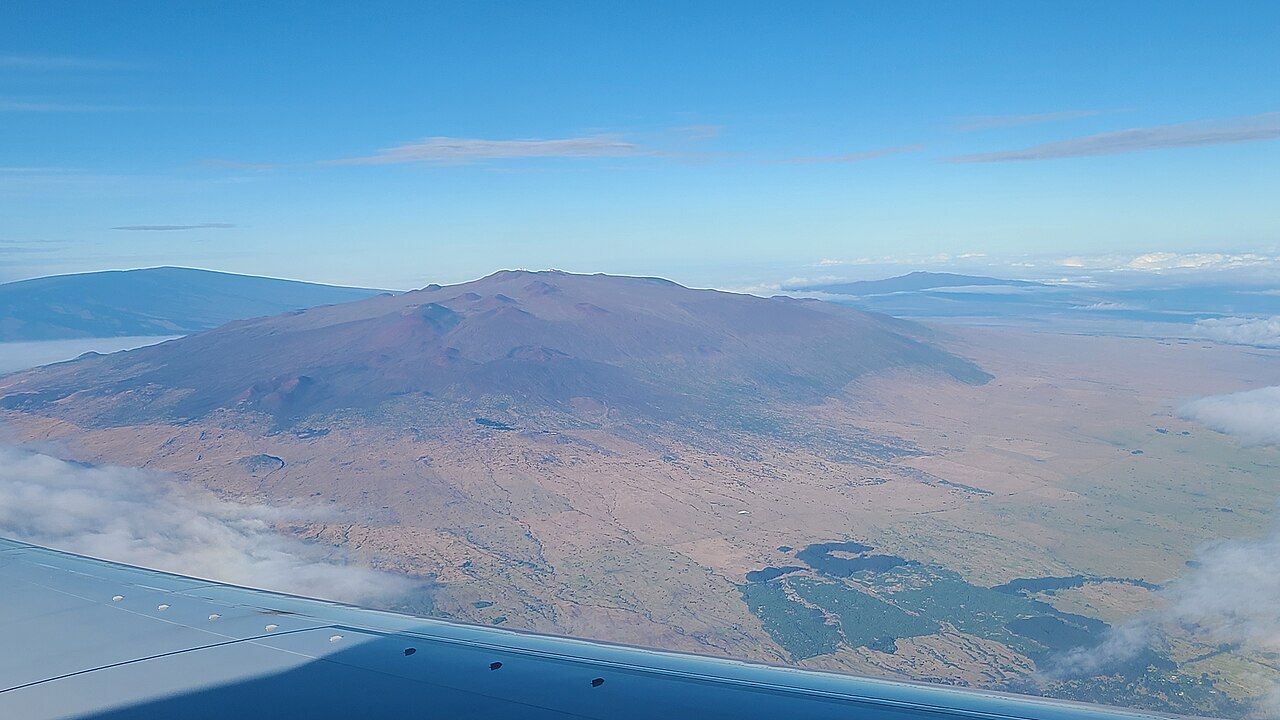
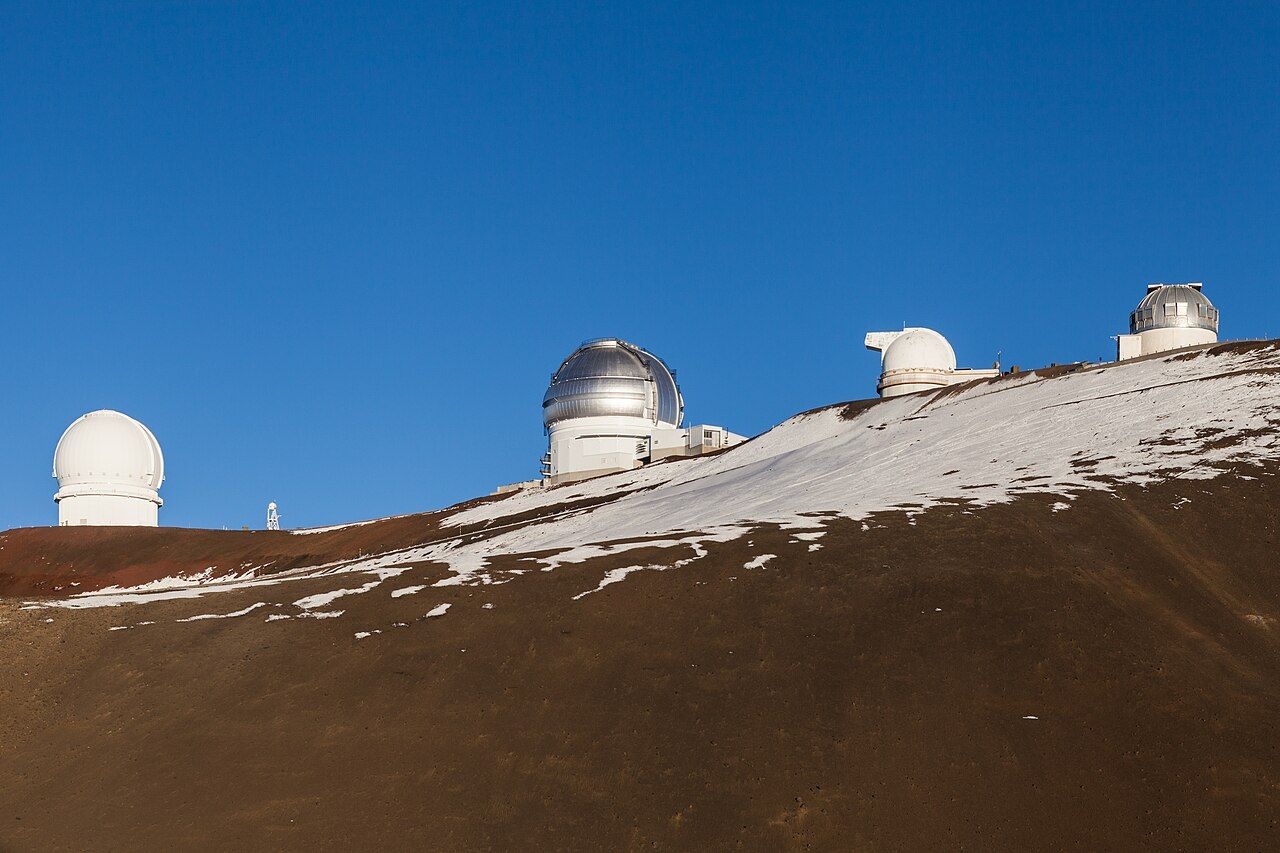
From Volcano and Hilo, Mauna Kea can spend the morning out of sight, then emerge as a pale length of mountain topped by white domes. In winter, snow sometimes marks the summit.
At 4,207 metres (13,803 feet) above the sea, it’s the highest point in Hawaiʻi. Measured from the seafloor where its flanks begin, the mountain is taller than Everest, a fact that’s easier to grasp once the coast has fallen away.
The day has two threads: a mountain held sacred in Hawaiian tradition, and a night sky counted among the clearest and darkest anywhere. They belong together, even if the telescopes are what first catch the eye.
2. What should stay in mind on the way up?
The upper mountain is wao akua, the realm of the gods. Mauna Kea is connected with Wākea, the sky father, and with Poliʻahu, the goddess of snow; near the summit, Lake Waiau is honored as sacred water.
Families have long brought the piko, the umbilical cords of newborns, to places on the mountain. Many Native Hawaiians see Mauna Kea as an elder relative, not simply a high point on the island.
There’s also a long-running dispute over the summit telescopes. In 2019, large numbers gathered at the access road’s base to oppose a new telescope, and called themselves kiaʻi, protectors. Since then, management of the mountain has been changing, with Native Hawaiian voices taking a greater role.
Respect here can be plain and practical: keep to roads and paths, leave rocks and shrines where they are, speak quietly, and don’t make stone stacks. The ʻahu, or stone altars, are there to be left alone. For another view of the island’s cultural landscape, see Pele, place and respect.
3. Where does the road level off?
The drive from Hilo or Kona follows the Daniel K. Inouye Highway, still commonly called the Saddle Road, between Mauna Kea and Mauna Loa. A turn near the saddle’s highest part leads uphill on pavement to the visitor information station.
At about 2,800 metres (9,200 feet), the station sits near the scrub’s upper edge and is where most people stop. The body gets less oxygen at this height than it’s used to, and there’s less still at the summit. Headaches, nausea, dizziness and shortness of breath are common; serious altitude sickness can develop.
The usual advice is to spend at least half an hour at the station before climbing higher. Children, pregnant women, and anyone with a heart or lung condition are advised to stay below the station. Scuba divers should leave at least a day between diving and the drive up, because of decompression sickness risk.
4. What changes above the station?
Past the visitor station, the road steepens and long stretches lose their pavement. Four-wheel drive is required beyond that point, and many rental contracts don’t allow the summit road. On the descent, use low gear rather than leaning on the brakes.
There’s no fuel on the mountain or across the saddle, and the climb burns more than expected. The road above the station can close without much notice, especially in winter, while the summit area is often closed to the public overnight. Rangers make the final call.
The visitor station looks across the saddle toward Mauna Loa; after dark, stars fill the view. Its exhibits, opening hours and public stargazing programs have changed in recent years, but the station is still the usual stopping place before any higher climb.

5. What belongs in the afternoon pause?
Give the stop time to do its job before deciding whether the summit road fits the day. Altitude is no small detail here, and the station’s height is already enough to make some people feel unwell.
If the summit is closed or weather turns, the saddle still gives striking views of the mountain. For a different high-country drive from the national park, the Mauna Loa road climbs the island’s other giant. The notes on driving around the island cover the Saddle Road.
Read next: Hawaiʻi Island by road: a crossing between worlds
6. What changes as evening comes on?
The temperature at the visitor station can drop close to freezing, and the summit is colder, with wind that cuts through cotton quickly. Shorts and sandals from the warm coast are poor company for a night up here.
A warm jacket, long pants, a hat and gloves make the evening more comfortable. The air is extremely dry, so drink water regularly; by day, the high-altitude sun is fierce, and sunglasses and sunscreen matter.
Arriving before dark leaves time to park and get oriented. Once parked, keep headlights low or switch them off, and don’t sweep them across the viewing area. Use a red-light torch held low instead of white light or a bright phone screen.
7. What comes into view after dark?
On a clear night, the Milky Way rises above the saddle, its bright band reaching toward a horizon without city glow. The sky is dark, dry and steady, and the stars can make the ground seem faintly lit.
Hawaiʻi Island lies far south of most of the United States, so constellations show up here that don’t rise in places farther north. Quiet is part of the evening for many people; low voices and carrying rubbish back down fit the setting.
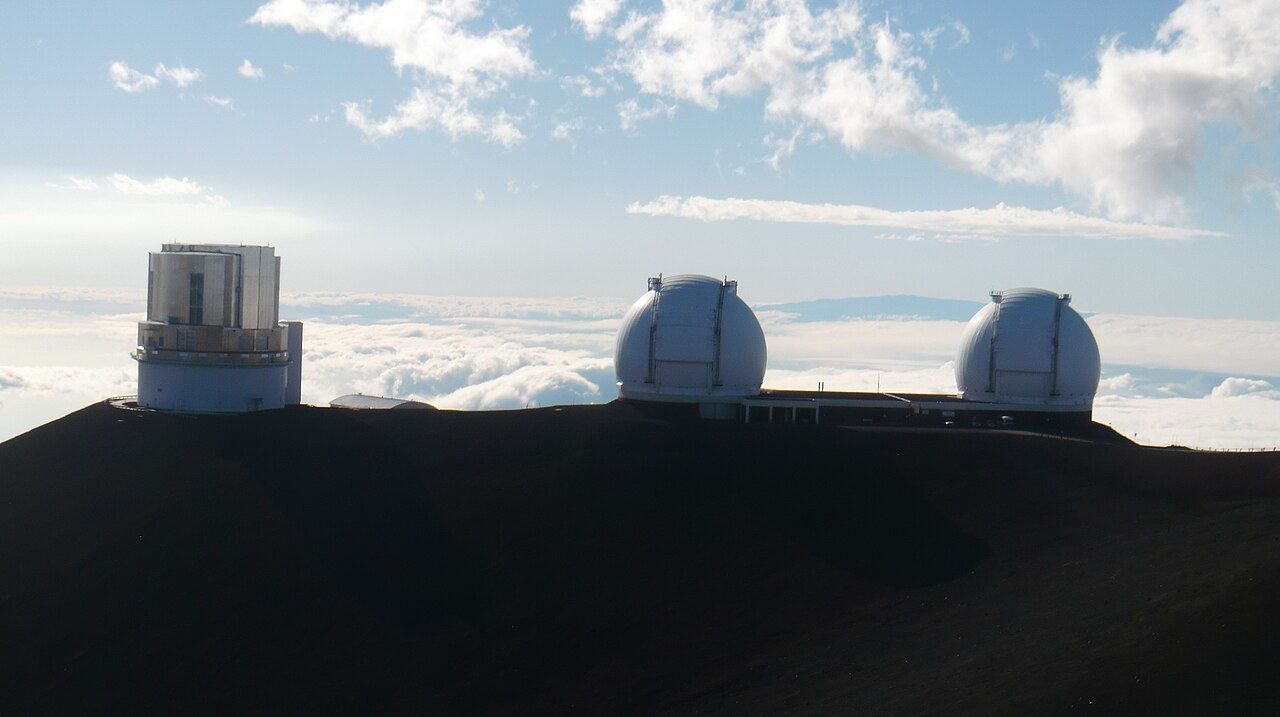
The domes along the summit ridge make a striking outline above the clouds, but the mountain holds more than a view of the observatories. Leave the ʻahu, rocks and other features untouched, and let the dark remain dark.

8. What does the way down ask?
Fog, cattle and the occasional nēnē, the Hawaiian goose, can be on the road after dark, so the descent calls for a slow pace. From Hilo, the visitor station is about 90 minutes away; from Volcano village, allow around two hours by way of Hilo and the saddle.
- Route: Saddle Road, then the summit access road.
- Visitor station: about 2,800 metres (9,200 feet).
- From Hilo: about 90 minutes to the visitor station.
- Bring: a warm jacket, hat, gloves, water and a red-light torch.
- Above the visitor station: four-wheel drive is required, and the upper road can close.
The stars are my favorite part; the cold gets my vote for least favorite.